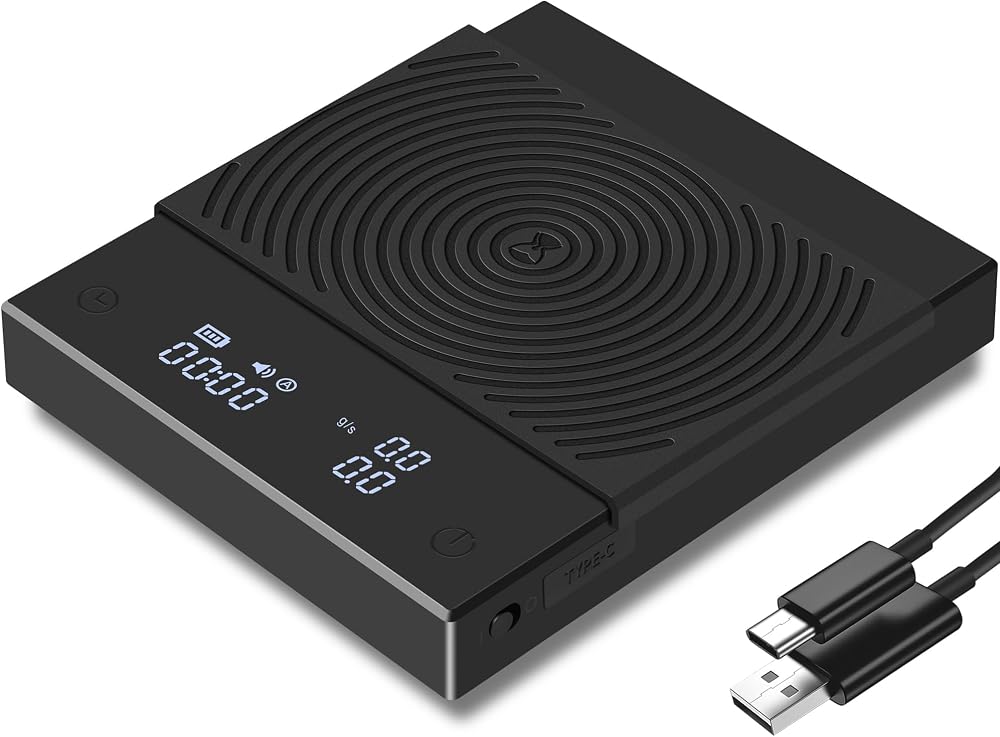
If you do exactly one "serious coffee" thing, weigh your coffee. Ratios are the recipe skeleton of every method, and they're the difference between guessing and brewing. Here are the numbers, then the reasoning.
The master table
| Method | Ratio | Example |
|---|---|---|
| Espresso | 1:2 | 18g in → 36g out |
| Pour over | 1:16 | 25g coffee, 400g water |
| French press | 1:15 | 30g coffee, 450g water |
| AeroPress | 1:14 (flexible) | 17g coffee, 240g water |
| Drip machine | 1:16–1:17 | 60g per liter |
| Cold brew concentrate | 1:5 | 100g coffee, 500g water |
| Moka pot | fill basket level | (the pot decides) |
Ratios are by weight, always — a "tablespoon of coffee" varies ±40% by grind and bean, which is why volume recipes fail. A $55 scale ends the guessing.
Why weight, why these numbers
Extraction targets a band: enough water to dissolve the sweet middle of the bean, not so much that you drag out the bitter tail. 1:15–1:17 lands filter methods in that band; espresso's 1:2 concentrates the same logic 8×. These aren't laws — they're the center of the dartboard, and you should start every new coffee there before adjusting.
Adjusting like you mean it
Cup too weak and sour? You likely need a finer grind, not more coffee. Too strong but tasting good? Stretch the ratio (1:17) rather than gutting your dose. Light roasts flourish at longer ratios (1:17, espresso 1:2.5); dark roasts drink better shorter (1:15, espresso 1:1.5–1:2). One variable at a time, always.
The two-minute workflow upgrade
Put the brewer on the scale. Tare. Add coffee, note grams. Tare. Pour to target grams. That's it — you've eliminated the largest source of day-to-day variance in home coffee, for free, forever. Dialing espresso is this same discipline with higher stakes.